
The space industry is gearing up for longer-duration missions to the Moon and beyond, and that requires new types of propulsion systems with higher efficiency and more thrust. That’s why rocket companies are rushing to test new combustion technologies that may be more capable of getting the job done.
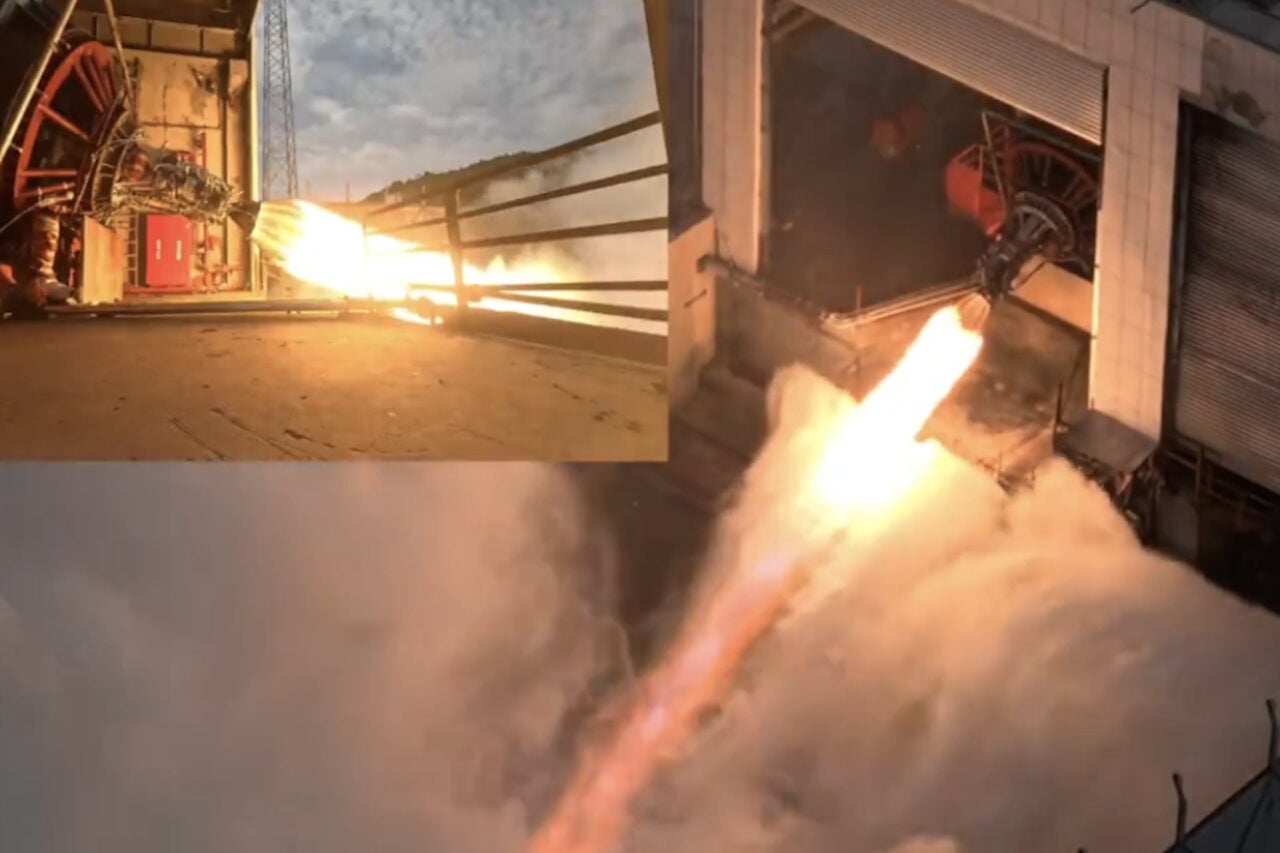
China’s Mega Engine recently put its Chi engine to the test, firing up the closed-cycle kerosene-liquid oxygen propulsion system for a total of 1,000 seconds across multiple tests. The long-duration hot fire test was a success, with Chi demonstrating rapid startup and stable operation while its hardware remained intact, the company announced on Monday.
Mega engine keep logging hours to their 80t level RP-1 closed cycle engine 炽/Chi. They don’t blur the engine body this time. The engine looks slim, wonder how the company is related to the Space Circling. via https://t.co/mY9e26iY6S https://t.co/AmXnhsJEGR pic.twitter.com/XcIMn1LdRh
— Ace of Razgriz (@raz_liu) May 26, 2026
Blazing glory
Mega Engine began operations in early 2024. The company’s flagship propulsion system, the Chi (blazing) engine, is designed to produce between 35 and 75 tons of thrust at sea level and about 87 tons in the vacuum of space. The closed-cycle engine burns kerosene as the fuel while using liquid oxygen as the oxidizer.
Rocket engines use pumps to feed fuel and oxidizer into a combustion chamber. Those pumps are powered by a small turbine, which needs hot gas to spin. In open-cycle engines, the exhaust is dumped overboard. For closed-cycle engines, however, the gas goes into the main combustion chamber and contributes to the rocket’s thrust instead of going to waste.
The Chi engine features an advanced oxygen-rich staged combustion cycle with the ability to achieve variable thrust, meaning it can change how much force it produces during flight by adjusting its propellant flow. It’s also capable of multiple restarts, which means it can reignite multiple times during a mission.
Fired up
With its design specifications, Mega Engine has crafted Chi for high-altitude propulsion on medium and large rockets. The engine can also be used for first-stage propulsion on small and medium rockets, according to the company.
Mega Engine is also working on a more powerful, 200-ton closed-cycle kerolox engine named Yan for heavy-lift vehicles. The company’s new propulsion technologies are part of a broader, nation-wide effort to develop liquid-fueled rocket engines for better reusability and efficiency.
In 2023, Chinese startup Landspace launched the world’s first methane-fueled rocket to orbit. The successful launch marked a major milestone for China’s private space industry as it looks to ramp up commercial activities and prepare for future missions to the Moon.