
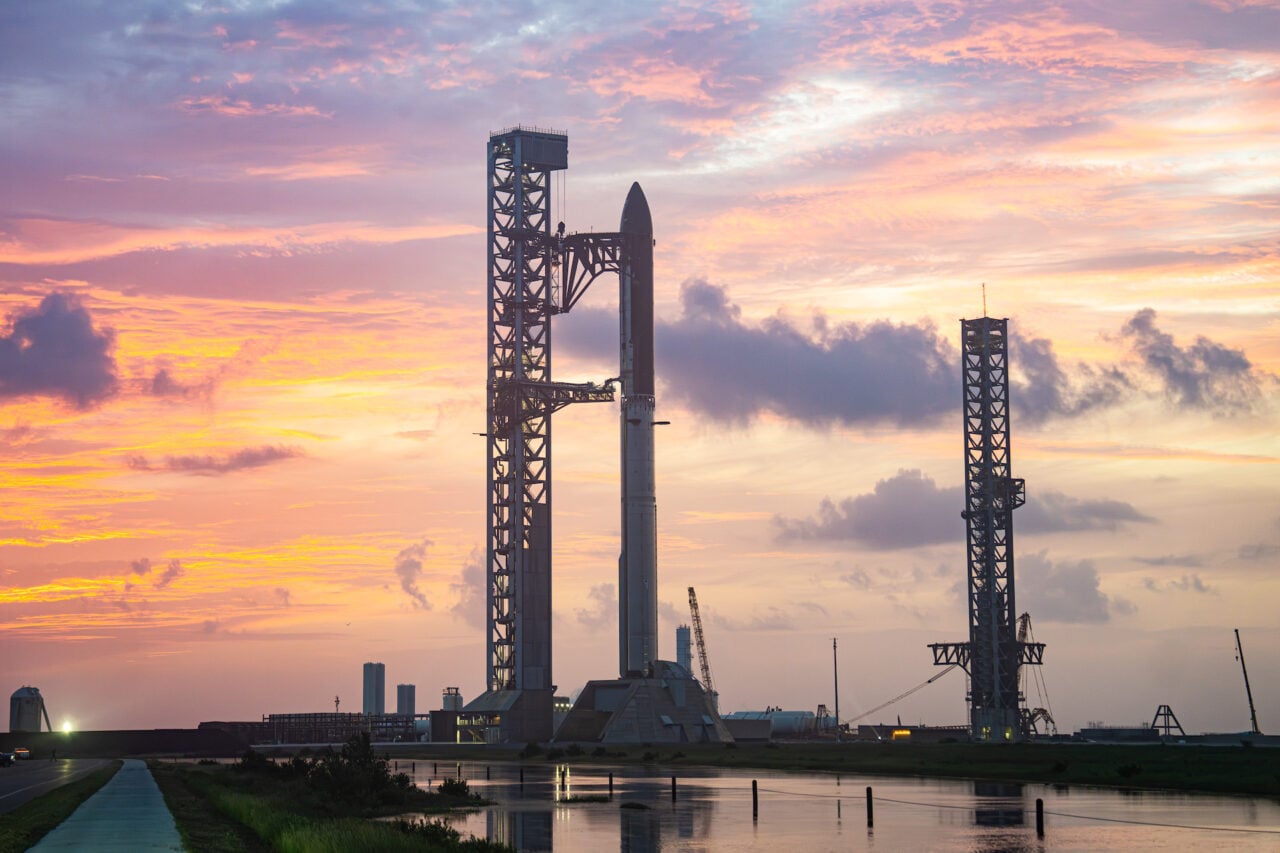
SpaceX is gearing up for the 13th test flight of its megarocket after an engine failure forced the company to abort its first try last week.
Starship Version 3 (V3) is scheduled for liftoff on Thursday, July 23, during a 90-minute launch window that opens at 6:45 p.m. ET. The world’s largest and most powerful rocket ever built will launch from SpaceX’s Starbase facility in Boca Chica, Texas. A live webcast of the test flight is set to begin around 30 minutes before liftoff, and you can tune in through the company’s website or through SpaceX’s X account.
Watch Starship’s thirteenth flight test https://t.co/wYoNPiNMz8
— SpaceX (@SpaceX) July 16, 2026
You can also watch through the third-party livestreams below.
Here we go again
Flight 13 is the second flight test of Starship V3, an upgraded version of the rocket that’s larger and equipped with more efficient Raptor engines. SpaceX intends to use this version for future orbital missions.
Starship V3 launched for the first time on May 22, and its debut was an overall success. The rocket reached its planned trajectory, deployed 20 dummy Starlinks, and made a controlled splashdown in the Indian Ocean.
There were some issues, however, that SpaceX is hoping to address with Thursday’s flight. During ascent, the Starship upper stage lost one of six engines. Also, the Super Heavy booster successfully ignited all 33 of its Raptor 3 engines, but one unexpectedly shut down. The booster also did not perform a controlled splashdown in the Gulf of Mexico after failing to light all the necessary engines.
Ahead of flight 13, engineers modified the booster to improve engine re-light reliability and updated the rocket’s engine alarms and aborts to better match the conditions of the multi-engine flight environment. The booster’s flip maneuver was also off by about 90 degrees during flight 12, so engineers changed the engine startup sequence.
The upcoming flight is aiming for similar objectives as the previous one, in addition to carrying next-generation Starlink V3 satellites for the first time. The previous flight focused on deploying the dummy satellites to orbit. This time, SpaceX will deploy functional Starlink satellites, aiming to extend their solar arrays and antennas and attempt to connect with the larger satellite constellation.
SpaceX modified six of the satellites to include a suite of cameras that will help the company gather data on Starship’s heat shield. The company also painted several tiles on Starship to simulate missing tiles and serve as imaging targets in the test.
A second chance
This is SpaceX’s second attempt at flight 13. The mission was scrubbed at the very end of the countdown on July 16 when some of the rocket’s engines failed to ignite.
“Some of the engines didn’t start, triggering an automatic launch abort,” SpaceX founder and CEO Elon Musk wrote on X at the time. “To be confident of a good flight, 2 Raptors will be removed & replaced.”
SpaceX swapped two of the Raptor engines and carried out additional testing on the ground ahead of Thursday’s flight attempt. With the new vehicle prototype, it may take a while for Starship V3 to perfect those test flights. Hopefully we get to see the megarocket soar to the skies today.