
Trailblazers is an MBW interview series that turns the spotlight on music entrepreneurs with the potential to become the global business power players of tomorrow. This time, we meet the leadership team at Cutting Edge Group: CEO Philip Moross, COO Tara Finegan, and Head of M&A Tim Hegarty. Here, they discuss how they built a billion-dollar-plus portfolio in film and TV music, and their plans for what comes next. Trailblazers is supported by TuneCore.
Cutting Edge Group has spent nearly two decades building something it says the wider music industry largely ignored: the lucrative business of film and television music.
Founded in 2006, the majority family-owned, UK-headquartered company has assembled a portfolio of owned and managed media music rights, valued at over $1 billion.
That collection comprises soundtrack albums, publishing assets and royalty income streams from some of the most recognized entertainment properties of the modern film and TV era: John Wick, Severance, Stranger Things, The Crown, Suits, The Walking Dead, Bridgerton, Ted Lasso, Yellowstone, The Office, South Park, and video games including Cyberpunk 2077 and Assassin’s Creed Valhalla.
But it was the deal Cutting Edge struck in February last year that signaled its arrival as a prominent institutional player: a joint venture with Warner Bros. Discovery worth in excess of $1 billion to co-own and co-manage the studio’s vast catalog of film and television music. The collection spans almost a century and contains more than 400,000 compositions.
That JV catalog reads like a history of Hollywood itself: the Harry Potter and Lord of the Rings franchises, DC Comics movies, plus TV shows including Friends, Game of Thrones, The Big Bang Theory, Succession, The White Lotus, Sex and the City, and The West Wing. Iconic films such as Rebel Without a Cause, The Exorcist, A Star is Born, Blade Runner, and The Shawshank Redemption sit alongside it.
“It signaled to Hollywood that we can compete for, win, and then operationally deliver on large-scale institutional opportunities,” Cutting Edge COO Tara Finegan tells us. “That has fundamentally changed our pipeline.”
The deal followed the company’s announcement of a $500 million debt refinancing in 2024 with a banking syndicate led by Fifth Third Bank and Northleaf Capital Partners, identifying approximately $1.5 billion in potential targets.
Cutting Edge now has $3-4 billion in identified targets.
“Film and television music was underserved, frankly misunderstood, and offered copyright terms that stretched over more than seventy years.”
Philip Moross
Then came the acquisition of AMC Studios’ full portfolio of TV music rights, adding compositions from The Walking Dead franchise and the Anne Rice Immortal Universe adaptations. And last month, Cutting Edge acquired the catalog of award-winning composer John Paesano, including scores from the Maze Runner trilogy, Kingdom of the Planet of the Apes, Marvel’s Daredevil, and the Spider-Man video game series. According to the press release issued in January, the deal covers music from franchises that have generated $1.8 billion at the global box office.
“Through our early conviction in this very specific area of the market, Cutting Edge has become a world-leading music partner to the film and TV industries,” says CEO Philip Moross, whose unconventional path, via Arthur Andersen, real estate development, and entertainment licensing, gave him an outsider’s lens on the music rights sector.
“Film and television music was underserved, frankly misunderstood, and offered copyright terms that stretched over more than seventy years,” he adds.
Today, Cutting Edge employs 50 people globally, with 30 specialists focused exclusively on acquisition and exploitation of film, television, and advertising music.
In just four years, it has completed roughly 30 acquisitions, a dealmaking spree that began with a $125 million commitment alongside Blantyre Capital in 2022, followed by a joint venture with Village Roadshow Entertainment Group, the acquisition of First Score Music’s catalog of more than 75 premium film scores, and even a move into pop music with an eight-figure deal for songwriter Jamie Hartman, whose credits include hits for Lewis Capaldi, Calvin Harris, and Rag’n’Bone Man.
Here, Moross, Finegan, and Head of M&A Tim Hegarty argue that media music remains significantly undervalued relative to pop catalogs. They also discuss the company’s expansion into wellness music alongside the Mayo Clinic, and their predictions for industry consolidation…
Philip, could you give our readers a brief intro into your career leading up to founding Cutting Edge?
Rather unusually for someone working in music investment, I began my career in real estate development and finance, rather than in the music business itself.
I started in audit at Arthur Andersen, then worked in the City, before starting a London-based residential and leisure property development business in ‘87. I ran that through the ‘92 property crash all the way up until 2010, when I sold it to focus exclusively on music. In parallel, between ‘93 and 2000, I also ran an entertainment licensing business working with high-profile film and television stars to promote apparel, which was my first introduction to the very exciting world of entertainment and showbusiness.
Both experiences taught me crucial lessons. The property crash was especially formative – watching a market collapse and interest rates spike by multiple percentage points overnight has left me acutely aware of cyclical risk. I didn’t want to start another business where external factors could devastate value like that. Meanwhile, the work in IP licensing showed me the potential value that one could find in a less cyclically sensitive sector, but it also introduced me to its limitations – celebrity licenses are short-term and pricing becomes prohibitive as the talent gets successful.
I ended up looking for something that combined the best of both – long duration and economically resilient without cyclical risk or pricing volatility. So that’s what led me to media music. Film and television music was underserved, frankly misunderstood, and offered copyright terms that stretched over more than seventy years. Coming into the industry from the outside meant I could look at it differently, analyzing it as an asset class. And that lens turned out to be quite useful. I sold the property business in 2010 to focus exclusively on music, and that’s where I’ve been ever since.
Tell us about the gap that you saw in the market that led you to launch the company?
Philip Moross: When I founded Cutting Edge, the entire music industry was focused on commercial music. To be honest, film and television music were treated as a poor relation.
There were rare exceptions – Saturday Night Fever, The Bodyguard with Whitney Houston’s cover of I Will Always Love You – but tellingly, those successes were driven by the record labels, not the studios. The studios viewed soundtracks as a cost center and had no proper acquisition and exploitation infrastructure around them. Nobody was building a scalable business in this space, and neither the composers nor the studios had the partner they needed.
“When I founded Cutting Edge, the entire music industry was focused on commercial music. To be honest, film and television music were treated as a poor relation.”
Philip Moross
But the value proposition was obvious once you began to look at it properly. The more I looked at film and television music, the more I realized that I was looking at non-correlated, resilient, cash-yielding, low-volatility income streams with inflation protection. The ownership profile was also attractive, in terms of its life of copyright and the lack of reversions or terminations. And there was real scope for active management, particularly heading into what we could see would be an era of digitization and streaming.
That era has been transformative, in and of itself. It has completely altered the shelf life and reach of top-class IP, especially in film and television. Friends is a good example – it’s a 30-year-old show, and yet it was one of the most streamed shows in the world in 2024. Every time an episode is viewed anywhere in the world, we receive a royalty payment related to the public performance of the music in the show. That’s the kind of durability you just don’t get in most other parts of the music business.
How is Cutting Edge positioned in the market today?
Philip: Put simply, we’re the category leader in media music. We actively manage the music to over 5,000 titles either directly or through our joint ventures, such as the one we established with Warner Brothers Discovery [last] year. There’s no comparable specialist operator at our scale – we’ve got 50 people globally, with 30 focused exclusively on acquisition and exploitation of film, television, and advertising music.
Those experts enable us to be an operator first, and an acquirer second. We’re constantly looking for opportunities to enhance other people’s entertainment products with top-class music. That’s strategic, not just philosophical. Premium content needs premium music – proper budgets, creative freedom, partners who understand this niche inside out.
“We actively manage the music to over 5,000 titles either directly or through our joint ventures.”
Philip Moross
Building that collection has been two decades in the making, and we’re continuing to seek out new opportunities. In the past four years alone, we’ve completed roughly 30 acquisitions, predominantly off market, through direct relationships with composers and production companies which we’ve built up over time.
Those two decades of dealmaking have given us a wealth of proprietary performance data across every major streaming platform and territory, which has allowed us to build proprietary valuation models. We understand growth curves, risk factors, and secondary exploitation potential better than generalist buyers coming into this space. That allows us to underwrite more accurately and improve monetization post-acquisition.
Cutting Edge is a family business – how do you balance family dynamics with billion-dollar business decisions?
Tara Finegan: We’ve been very intentional about establishing institutional-grade governance despite being a family business. We have a clear separation of roles, formal investment committees, and a strong non-family senior team. Overall, the key is maintaining discipline. Every major decision goes through the same rigorous process regardless of who’s advocating for it.
But that doesn’t mean we’ve stopped being a family, and I believe that in itself is a huge advantage for our business. Media music requires long-term thinking – these are 50, 70-year assets. And when a composer chooses to sell their catalog, it is a personal decision that they are making for their family, and we’ve become adept at partnering in whichever way best fulfills their goals.
With over $1 billion of assets under management and $3-4 billion in identified targets, what criteria determine which catalogs/ companies make the cut?
Tim Hegarty: Our deal selection is highly disciplined – we review hundreds of opportunities and execute on a small percentage.
The first criterion is content quality and durability. We’re underwriting based on viewership longevity – is the catalog attached to tentpole franchises, award-winning content, or programming with demonstrable staying power? Is it demonstrating an ability to maintain or grow its market share in the shift to digital distribution? Premium content drives premium, predictable cash flows.
But content quality alone isn’t enough. Data quality is equally non-negotiable – our forecasting is sophisticated, but it requires robust inputs. If we can’t get comfortable with the historical performance data or identify where revenue is coming from on a title-by-title basis, we usually pass.
More broadly, diversification is always at the top of our minds. Media music is often highly diversified by nature – a single writer can work across numerous film and TV shows during their career, and a single studio’s catalog will span decades and tens or hundreds of individual composers. But we’re always looking for ways to further this diversification when it comes to portfolio construction, ensuring that we have a full and varied range of genres, content types, territories and distributors in our catalog, to help reduce risk.
The pipeline you mention represents assets that meet most or all of these criteria.
What kind of M&A opportunities are you seeing in the market?
Tim: There’s a very healthy pipeline for future growth, which mostly falls into two buckets: large-scale partnerships and mid-market acquisitions.
On the strategic side, following our deal with Warner Brothers Discovery, other studios are looking at whether similar structures could help optimize their balance sheets and support operations. Those kinds of deals are about creating structured partnerships where we bring operational expertise and capital while they retain the desired creative control and economic participation.
More broadly, the mid-market remains very active. It’s filled with hundreds of individual composers and independent production companies that have reached $1-20 million in annual music royalty revenue but lack the infrastructure to maximize value globally. They need specialist collection capabilities, secondary exploitation teams, and technology platforms they can’t justify building themselves. Where we come in is essentially providing institutionalization and liquidity for assets that have been owner operated.
How did the Warner Bros. Discovery billion-dollar joint venture reshape your business model?
Tara: The Warner Brothers Discovery deal was the culmination of a fifteen-year relationship, during which we had time to study the catalog, devise a specific deal structure that would work for their balance sheet requirements, and build credibility with the existing music team and their creative community. We needed the time to forge a genuine operational partnership, not just a financial transaction.
From a business perspective, it was transformational. We went from a significant independent to a major player overnight. But rather than reshape our business model, what it did was validate our entire approach – our business model, our focus, our investment thesis – at the highest level. It signaled to Hollywood that we can compete for, win, and then operationally deliver on large-scale opportunities. That has fundamentally changed our pipeline and the conversations we are having with other major studios.
Since we closed on the Warner Brothers Discovery deal, the integration has gone very well and has demonstrated that we can execute complex institutional-grade transactions and co-manage one of the largest music catalogs in Hollywood while preserving the operator-first ethos, flexibility, and innovativeness that differentiates us.
Do you anticipate more studios following Warner Bros. Discovery’s model of partnering with music specialists?
Philip: Absolutely! What Warner Brothers Discovery demonstrated is that there’s a middle path between holding assets sub-optimally and selling them outright. Studios are film and television companies, not music publishers.
The partnership model we structured with Warner Brothers Discovery, over many months, allows them to optimize their balance sheet and refocus on core content production while retaining economic participation. Crucially, it also ensures the music team and creative relationships are preserved.
The timing for these kinds of deals is pretty favorable as well. Streaming has created enormous content libraries with valuable music assets attached, but studios are under significant capital allocation pressure – they need to demonstrate returns to their investors. A specialist partnership like ours that delivers immediate value while giving them access to the upside from improved exploitation is increasingly attractive.
Frankly, I expect this to become a standard structure for the industry, though each deal will be bespoke based on catalog composition, existing relationships, strategic objectives, and the like. We’re well-positioned as the partner of choice given our operational capabilities, capital access, and proven track record of delivering at this scale while serving the creative community effectively.
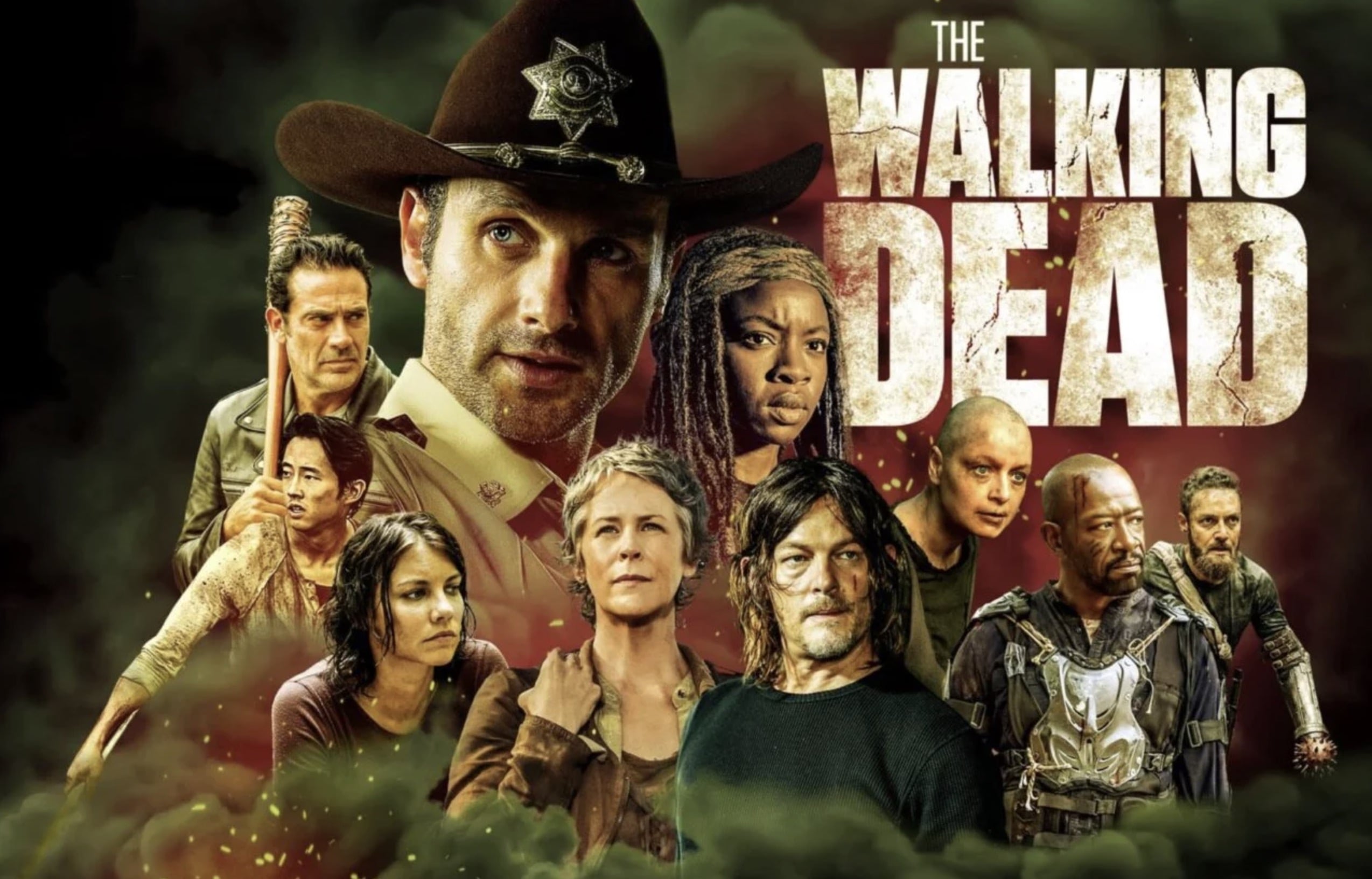
You acquired AMC Studios’ full portfolio of TV music rights last year. What made that deal attractive, and tell us about the value Cutting Edge can add to the catalogs like this post-acquisition?
Tara: AMC Studios’ catalog represents our ideal type of asset: premium content with demonstrated cultural durability and global distribution.
The Walking Dead delivered 48 of the top 50 cable entertainment telecasts of all time! And there are multiple spin-off series from that universe that continue to come out with new seasons. AMC is building a similar fanbase with the Anne Rice Immortal Universe shows –
‘Talamasca: The Secret Order’ just hit screens this quarter and we are extremely excited for ‘The Vampire Lestat’, with its rock n roll storyline, to be released next year. That viewership longevity and reinvigoration via new seasons and spin-offs translates directly into predictable, growing royalty streams.
“AMC Studios’ catalog represents our ideal type of asset: premium content with demonstrated cultural durability and global distribution.”
Tara Finegan
Currently, we’re getting to work on increasing the catalog’s reach, influence, and legacy. We’re plugging the catalog into our global collection infrastructure and secondary exploitation teams. That means a dual strategy of making sure we are collecting all the royalties that we are entitled to by checking registrations, tracking broadcasts, resolving conflicting claims, and the like, while finding new secondary opportunities to generate revenue such as sync licensing, live-to-picture concerts, soundtrack album distribution and DSP marketing.
Would you say media music is undervalued/ misunderstood in the wider market and if so what’s your message to institutional investors about why media music deserves more attention than it gets?
Philip: Definitely. Media music remains significantly undervalued relative to pop catalog, and primarily due to lack of familiarity most investors have with it and the absence of marquee names.
Institutional investors understand Taylor Swift or The Beatles – those deals generate headlines. Film and television music lacks that visibility, despite in many cases offering superior risk-adjusted returns.
But the market is maturing. The Warner Brothers Discovery transaction alone represents a significant, large-scale validation of the asset class. Fundamentally though, the barrier to entry is high unless you find the right partner.
What other trends are you seeing in the market that we should know about?
Philip: There’s a clear flight to quality happening in content. Video streaming services initially pursued volume, but they’ve quickly realized that people feel overwhelmed, so now they’re focused on premium programming that drives and retains subscribers. Shows that win awards, generate cultural conversations, get rewatched – those have dramatically longer shelf lives, and dramatically higher financial value. We’re focusing acquisitions on music attached to that top tier of films and TV shows, because their durability is in a different league.
Beyond traditional media music, we’re seeing real opportunity in adjacent applications of music. Our wellness subsidiary Myndstream just announced a collaboration with Mayo Clinic – they’ve taken an equity stake and we’re researching clinical applications of functional music in healthcare settings together. Most people in music aren’t that familiar with the wellness industry, but it’s absolutely huge – it’s projected to reach $9 trillion by 2028. Functional music is a small but growing part of that industry, and research has shown that it can have a clear therapeutic impact on everything from anxiety to pain management, meaning it can be an incredible tool for healthcare providers, and indeed a new revenue stream for music companies.
Which global territories excite you most for music rights growth?
Philip: They’re all pretty exciting to be honest – geographic expansion is a very significant growth driver for us across the board. India, Africa, Southeast Asia, the Middle East – streaming penetration is accelerating across all of these countries, which represent nearly 3 billion potential subscribers, and the collection infrastructure is also slowly catching up.
As performing rights organizations formalize and streaming platforms expand properly into these markets, catalogs tied to globally distributed content are going to finally see meaningful revenue from markets that were essentially contributing a pittance a decade ago. That’s a massive opportunity.
Tara: We’re also focused on continued growth in established markets that are often overlooked. The UK demonstrates this dynamic – BBC viewership has increased from 77% of British adults to 84% over the past 20 years, primarily through the digital accessibility provided by BBC iPlayer, which shows how even a well-established content provider can reach new audiences.
What are your predictions for the music rights M&A space over the next five years?
Tim: Consolidation will be the dominant theme. The market is currently fragmented with hundreds of smaller catalogs and publishers, but the economics of this market increasingly favor scale. Sophisticated tracking technology, global collection infrastructure, platform relationships – these all require substantial fixed investment, which can be tricky for smaller players. As a result, I think we’ll see roll-up activity accelerating across the board, as smaller players struggle to compete on both pricing and operational efficiency.
“The market is currently fragmented with hundreds of smaller catalogs and publishers, but the economics of this market increasingly favor scale.”
Tim Hegarty
I also think that the transactions themselves will evolve beyond simple acquisitions. The Warner Brothers Discovery model demonstrates that JVs and structured partnerships can work at scale, so I would expect more studios to consider partnerships along those lines.
More broadly, valuation methodologies will probably become more sophisticated as the data that feeds into them improves. We expect to see increased focus on viewership data, pricing, churn, geographic diversification, and durability, at the very least.
How will AI-generated music impact film/TV music rights?
Tara: It’s a good question. I don’t think AI is going to replace composers creating music for high-quality film and television; that human creative process remains essential.
“I don’t think AI is going to replace composers creating music for high-quality film and television; that human creative process remains essential.”
Tara Finegan
The main opportunity for us is on the operational side: put simply, AI will allow us to collect royalties more effectively. Actively claiming misassigned royalties across millions of individual broadcasts and performances is no small task, and AI can assist us with that. If we feed it the right information – the correct cue sheets, the proper publishing data, the actual music – it can identify misattributions and registration errors much more quickly and comprehensively than humans can.
That translates directly into higher revenues for everyone involved.
If you could change one thing about the global music business, what would it be and why?
Philip: It would be ensuring transparency of earnings throughout the entire royalty chain – from broadcasters and streaming platforms through to PROs, CMOs, publishers, record labels, and everyone in between.
Coming from real estate, where it’s fairly straightforward to ensure you get paid what you’re owed, the opacity in music royalties genuinely shocked me. Even now in 2025, we still receive generic rolled-up income statements that span entire TV series rather than breaking out the royalties composition by composition. Some international statements even fail to attribute income to specific streaming services.
“Composers and publishers can’t properly value their work or understand their income sources without transparent, detailed statements.”
Philip Moross
The lack of audit rights in many cases compounds the problem. When you often can’t properly audit what you’re being paid, and the statements don’t provide granular detail on usage, you’re essentially trusting that everyone in the chain is calculating and paying correctly.
Digitization has made detailed reporting technically possible – platforms know exactly what’s being streamed, when, where, and by whom. The infrastructure exists. What’s missing is the mandate and the resources for everyone in the chain to report it properly.
This isn’t just about us as operators – it’s about creators getting fair remuneration. Composers and publishers can’t properly value their work or understand their income sources without transparent, detailed statements. AI and other technologies should alleviate the resources issue in the future, but it will be up to all of us in the music community to insist on the mandate.

Trailblazers is supported by TuneCore. TuneCore provides self-releasing artists with technology and services across distribution, publishing administration, and a range of promotional services. TuneCore is part of Believe.
Music Business Worldwide