
Why yes, it is new robo-vacuum season! After a couple years of making robots with gripper arms and legs that can (maybe) climb stairs, Roborock has gone back to the basics and updated its mid-tier line of robovacs. The Qrevo Curv 2 Flow is similar in looks to the original, but it gets a few spec bumps, and most significantly, it adds the company’s first-ever roller mop. And y’know what? It’s the most powerful mop I’ve encountered on a robot vac—but only where it can reach.
Let’s back up quickly. The original Qrevo Curv was positioned as Roborock’s flagship model at the time it launched, and it cost a very flagshippy $1,600. It distinguished itself by being able to climb over thresholds up to four centimeters (about 1.58 inches), and by having a lovely, curved docking station (from which it derives its name) that looked smaller, sleeker, and blended in better than the boxier docks out there. The Qrevo Curv 2 Flow is more approachable at $1,000, making room for the forthcoming Saros 20 flagship. Despite that, it’s noticeably better than the original model in most ways.
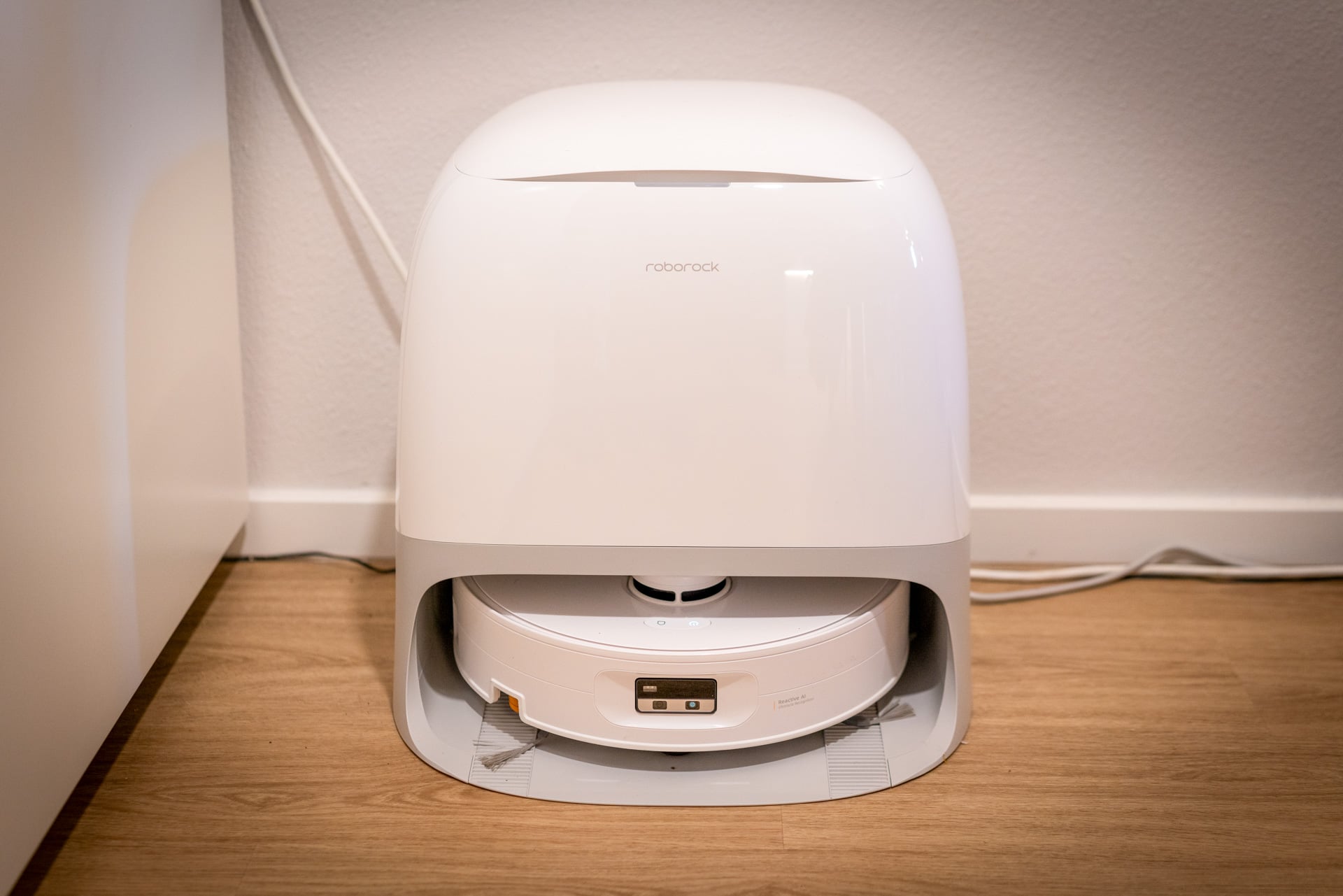
The vacuum on the Qrevo Curv 2 Flow has been bumped to 20,000 pascals of suction power, up from 18,500 Pa on the original. It still uses the excellent DuoDivide Anti-Tangle brush, which is split in the middle and funnels long hair and string into its lil’ vacuum-y center. It can still clear 4-centimeter thresholds, it still uses a mix of LiDAR and cameras to navigate, and the dock still cleans the mop with 167-degree Fahrenheit water to reduce bacteria.
Roborock Qrevo Curv 2 Flow
The Roborock Qrevo Curv 2 Flow is an impressively powerful mop, but it has a limited reach.
- Innovative mop design cleans deeper
- Mop self-cleans as it goes
- The best-looking docking station out there
- No mop-only mode anymore
- Uneven performance around edges and corners
- Small object avoidance still needs work
- Takes 3 hours to fully charge
Extra powerful mopping
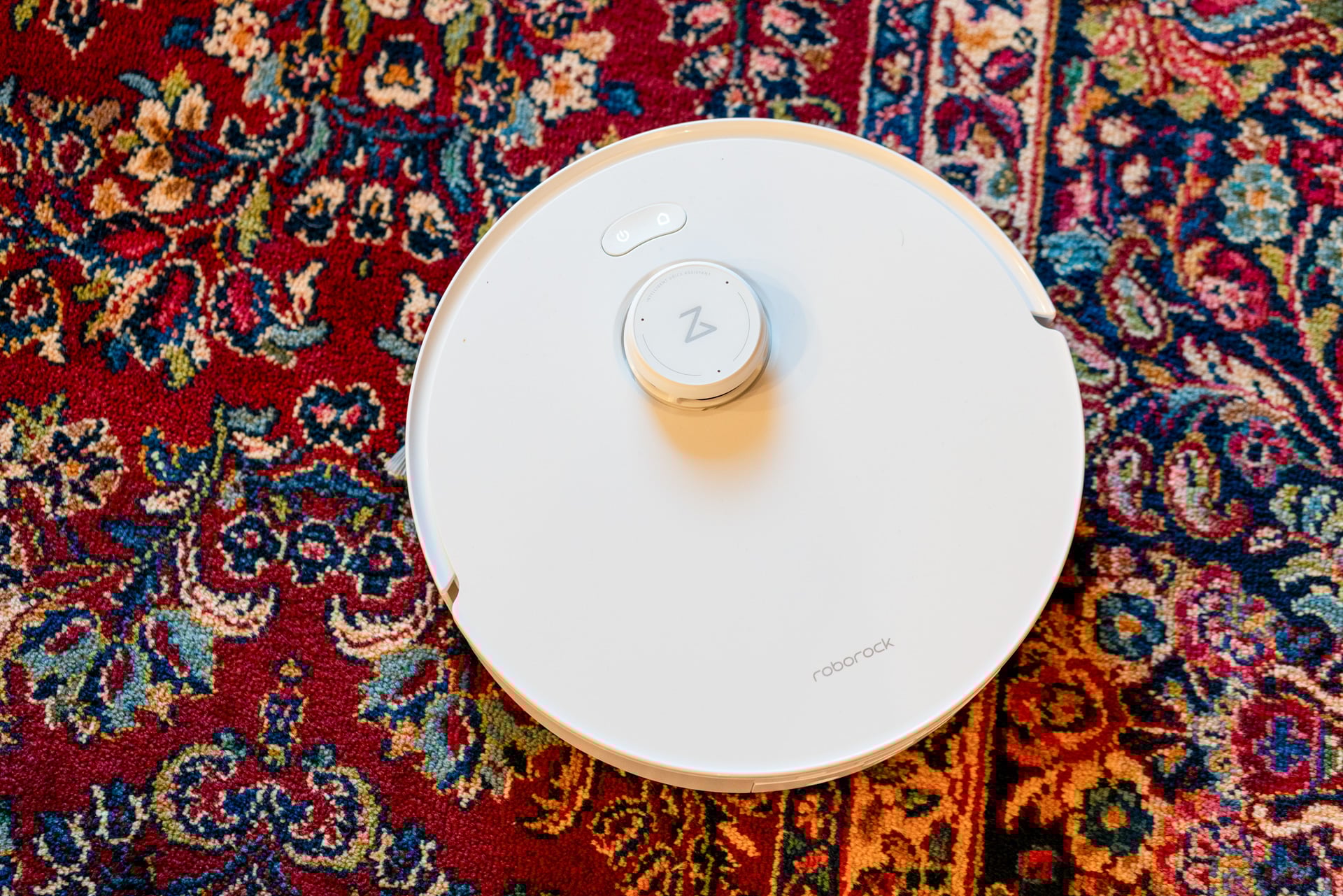
The biggest update is the new mopping system, which Roborock calls the “SpiraFlow Roller Mop.” It’s actually quite slick, featuring a wide, 10.5-inch roller mop (that looks not unlike a paint roller) that spins at 220 rpm and exerts an impressive amount of downward pressure. The circular pad system on the original Qrevo Curv pushed down with about 6 newtons of force, while the Curv 2 Flow pushes down more than twice as hard, at 15 newtons. The mop can also extend a couple inches outward from the right side of the robot, allowing it to mop within roughly 0.4 inches of walls and furniture (allegedly).
One of the mop’s most compelling features is that it has a built-in scraper in the back, which funnels dirty water into an onboard dirty water tank. For context, most robovacs mop around for a bit, return to their dock to wash their mop, and then head back out for more cleaning. The Curv 2 Flow’s system means it isn’t just pushing dirty water around, which can cause streaking and other nastiness. Instead, it’s self-cleaning as it goes, and the width of the roller makes it more efficient, so it takes fewer passes and mops faster.
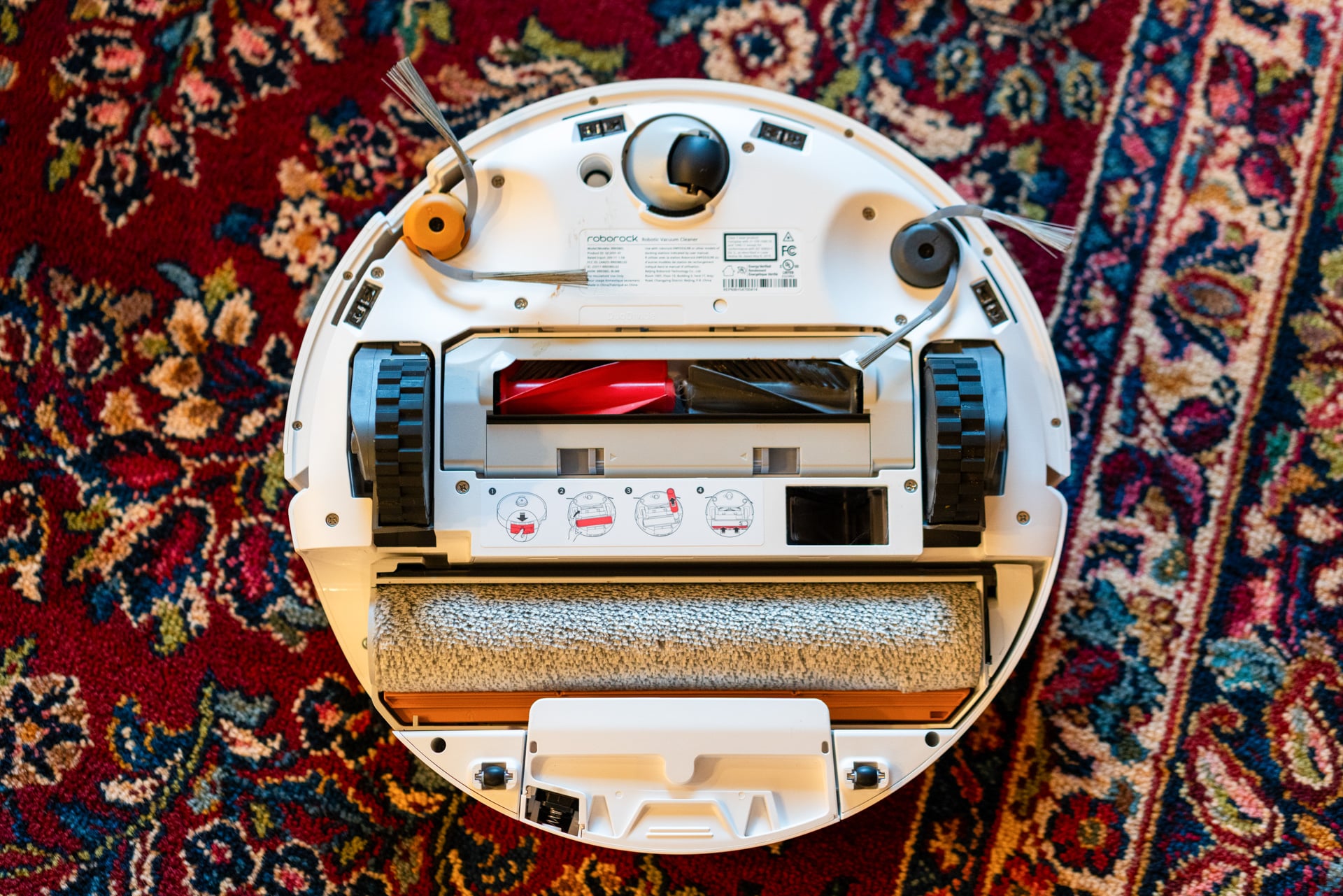
It even has sensors that can detect when it needs to go back over an area, and it will theoretically give it more attention until the job is done. When it senses that it’s going over carpet, the mop lifts up a little over half an inch, and the “Roller Shield” cover extends around the roller to keep your carpet dry. Overall, it’s a very innovative system.
See roborock Qrevo Curv 2 Flow at Amazon
Putting it to the test
So, how well does it actually work? I found setup to be quick. You just use the app to scan the QR code on the vacuum, fill the clean water tank, and tell the robot to map your house.
For my one-bedroom apartment the scan took about five minutes. The mapping is generally very accurate, though the floor-to-ceiling mirrors on my closets and the sliding glass door to my balcony made it think there were spaces that didn’t exist. Not the biggest deal, as it’s easy enough to edit those things out of the map, which you’ll want to do anyway because you’ll need to draw boundaries between rooms and name them (thus enabling voice commands like “vacuum the bedroom”). It didn’t quite nail where my rugs were, either, so it’s worth manually checking those so the robot doesn’t try to mop them. You can add furniture into the map, too, but it’s a bit cumbersome, and I’m not entirely sure what the point is, since it’s going to avoid anything it encounters anyway. It’s worth noting that unlike the Saros line, the Curv 2 Flow’s dock doesn’t have a separate tank for detergent. You just have to remember to add a couple spoonfuls into your fresh water tank every time you refill it, which is easy to forget to do.
Once you send it off on a cleaning mission, it does a pretty solid job. The vacuum did an excellent job picking up stray hairs from my laminate flooring and sand from my medium-pile rug, and it performed admirably, though not perfectly through my standard gauntlet of goldfish crackers, Tic-Tacs, spices, olive pits, and pistachio shells. The shells were the toughest for the Curv 2 Flow to suck up, but it got most of them, and it only crushed one cracker, and even then it vacuumed up most of it.
In a departure from most of Roborock’s robot vacuums, this one has two sweeper brushes up front, which help pull debris into the roller brushes in the middle, but neither of them can extend outward from the robot’s body, as it could with previous models, and that feels like a miss. The result is that it struggles to sweep dirt out of corners—leaving about 1.5 diagonal inches unswept—and it doesn’t get the edges as reliably either.
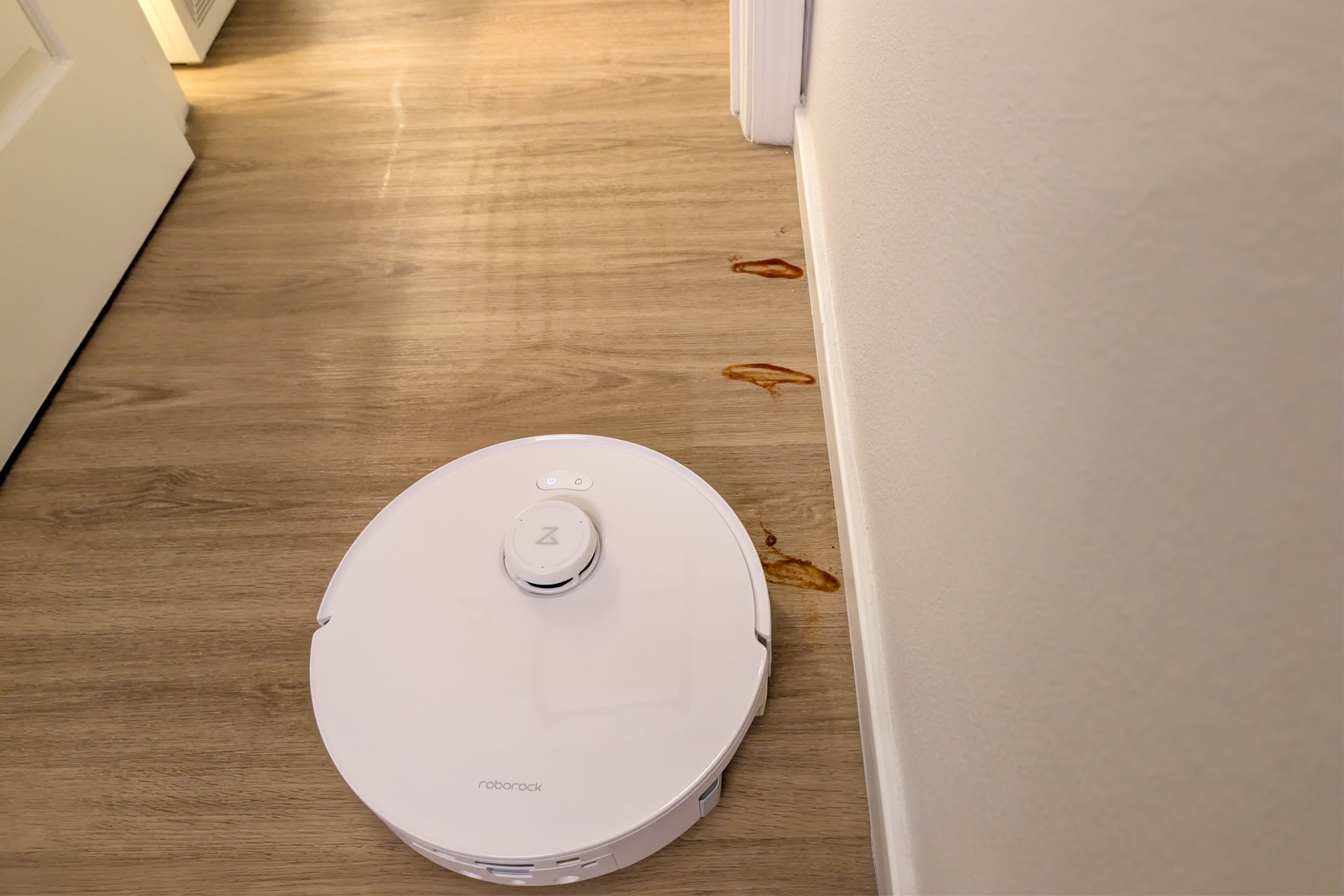
The mopping is where this thing really shines. The new roller system does indeed clean deeper than any of the previous bots I’ve tested. I splashed BBQ sauce, milk, mayo, and jerk sauce all around my kitchen, and let it all dry for two hours. The Curv 2 Flow got all of the mayo and milk on the first pass, and it was smart enough to recognize that it needed to go back over the BBQ sauce, which it did, and it got most of it (though not all of it). Once I sent it back out to that spot to hit it again, the robot vac got nearly everything from the middle of the floor.
Dyin’ on the edge
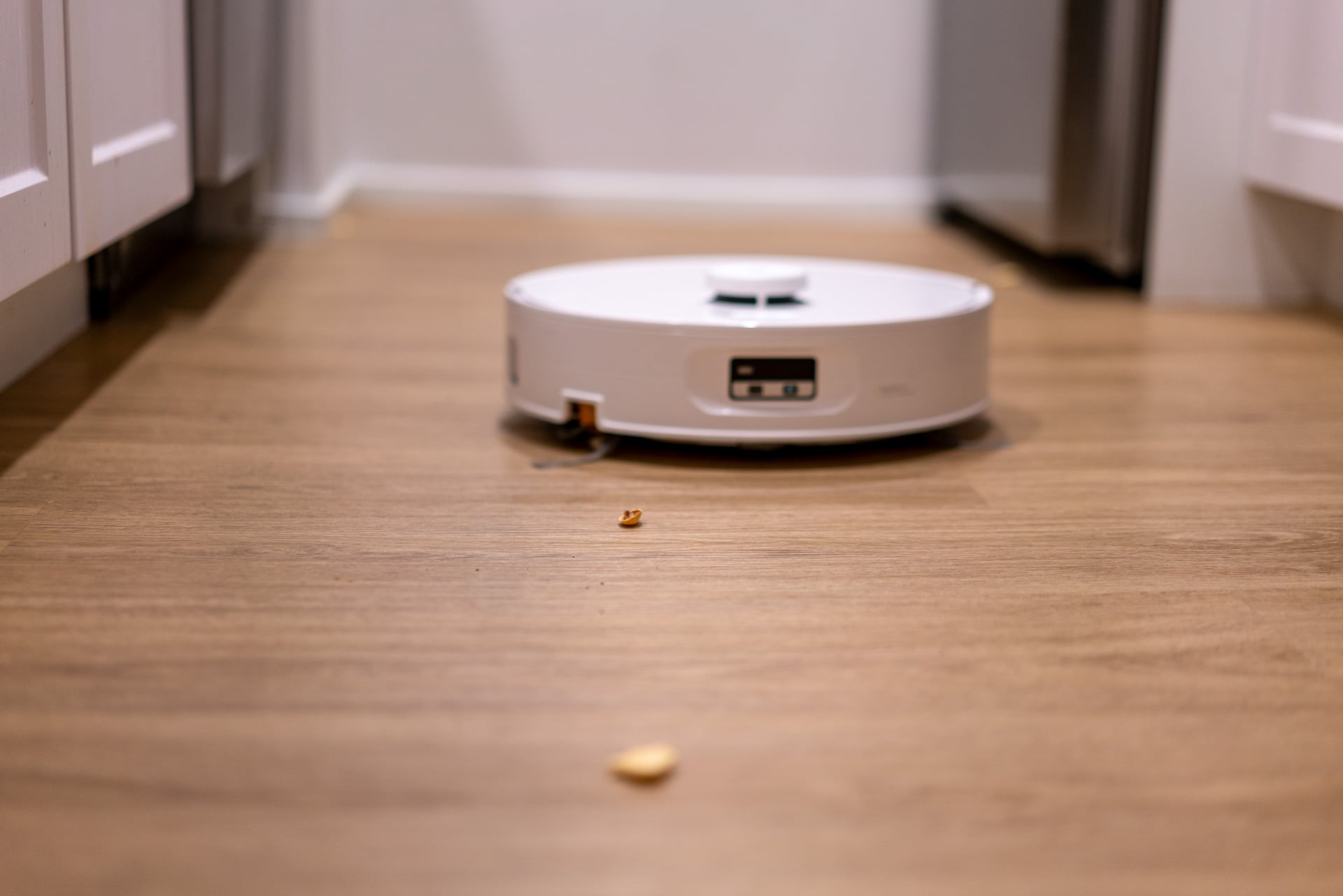
Edge performance, however, was very inconsistent. Even with the mop extending out from the Curv 2 Flow’s body, there were tests when it got to within half an inch of the wall, and times when it left 8-inch gaps. It was strange because I had trouble getting it to repeat the same result twice. Sometimes it just refused to get anywhere near a wall, and other times it got effectively everything. It didn’t do well with mopping in the corners, either. I suspect some of this could be fixed with a firmware update, so here’s hoping that gets addressed down the line.
Another weird thing: Every other Roborock bot I’ve tested has had several modes I could choose from, like Vac & Mop, just vacuum, just mop, or SmartPlan (its AI-assisted mode). For the Qrevo Curv 2 Flow, despite the mop being the obvious banner feature, Roborock moved the mop-only mode, which is a baffling decision. I assume the company is trying to drive more people to use the AI SmartPlan, but if you’ve got a big wet mess, the robot tends to drive over it before it notices. Further, the two sweeper brushes up front drag through the stuff. I had to turn the robot over and manually clean the brushes because they got so much BBQ sauce in them they hardened into sticks. Not great. I’d love to see a mop-only mode that keeps the brushes as far out of the way as possible.
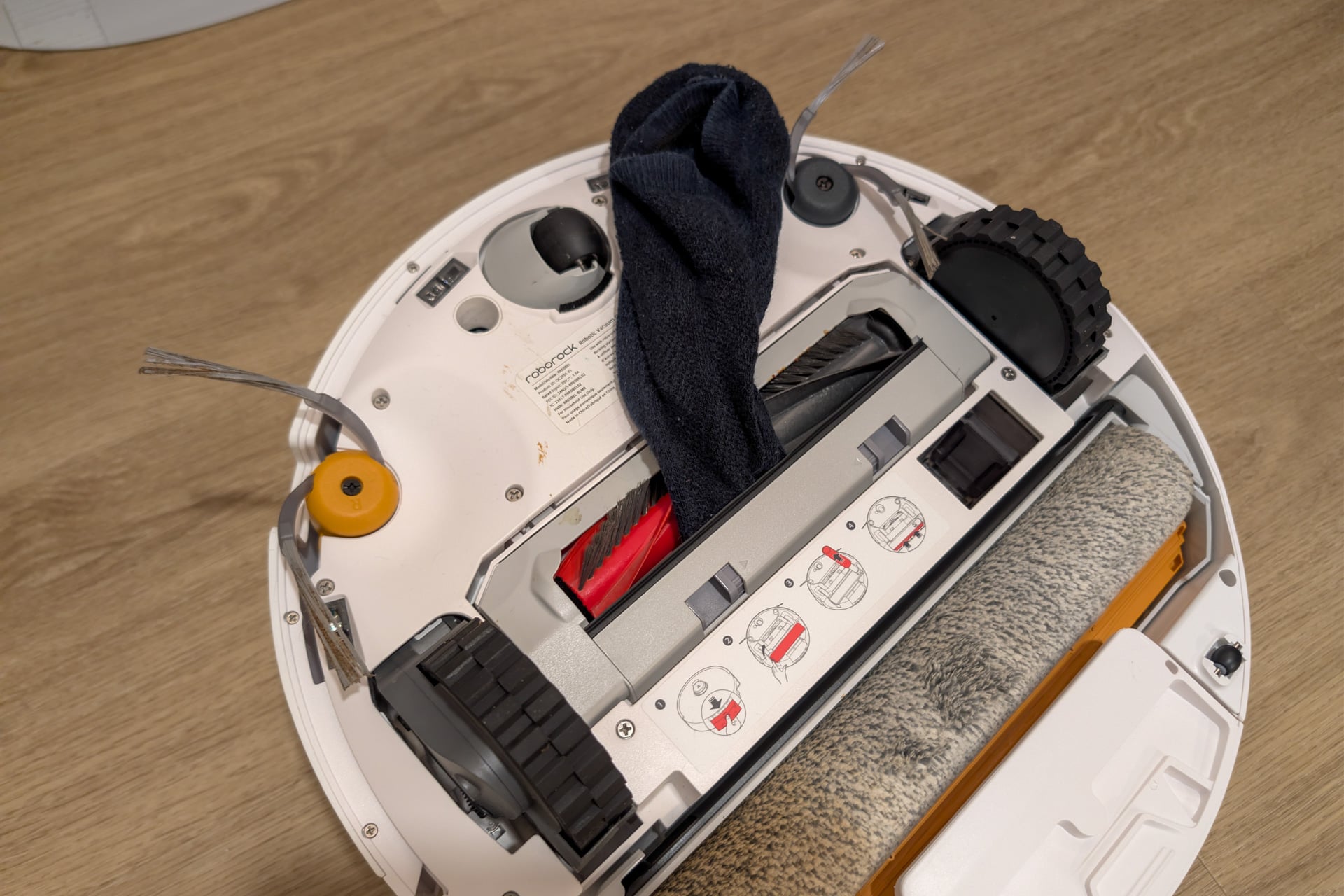
Object recognition has certainly improved over the years, but I’m sad to say that it still ate a black USB-C cord off my lightly colored hardwood floor, and it sucked up a black sock off my patterned Persian rug. Cords in particular have to be these bots’ number one hazard, so they’ve really got to get better at spotting them. Or if they’ve slurped something up that they shouldn’t have, they should be able to recognize that their roller brush isn’t spinning like it’s supposed to and initiate some kind of regurgitation protocol.
It’s also worth noting that this is one of the tallest robovacs I’ve tested. Coming in at 4.7 inches, it’s 0.6 inches taller than the original Curv and a whopping 1.5 inches taller than the slim Saros line. I have a couple cabinets that have doors that sit a little too low to the floor, so the Curv 2 Flow wasn’t able to clean under them.
Battery life isn’t fantastic, and unfortunately neither is the recharge time. The Curv 2 Flow can quick-clean my 650-square-foot apartment in one pass in some of the less intense modes, but if I select “Vac followed by Mop” and crank up the power level, it just barely makes it on a full charge. If it doesn’t, it takes nearly three hours to recharge and then continue. That might be a dealbreaker for people with larger homes, though I don’t really mind breaking up the cleaning schedule, which is easy to do in the app.
Where the dust hits the bin
Overall, I’d say Roborock’s Qrevo Curv 2 Flow is a pretty solid robot vacuum, with some flaws, that comes in at a decent price (especially if you can get it on sale). The mopping prowess is very impressive, and if you have a lot of hard floors, this might be the ideal 2-in-1 vacuum and mopper for you. I just hope that future firmware updates teach it to get closer to walls, but I’m not holding my breath.




https://shorturl.fm/GATXx